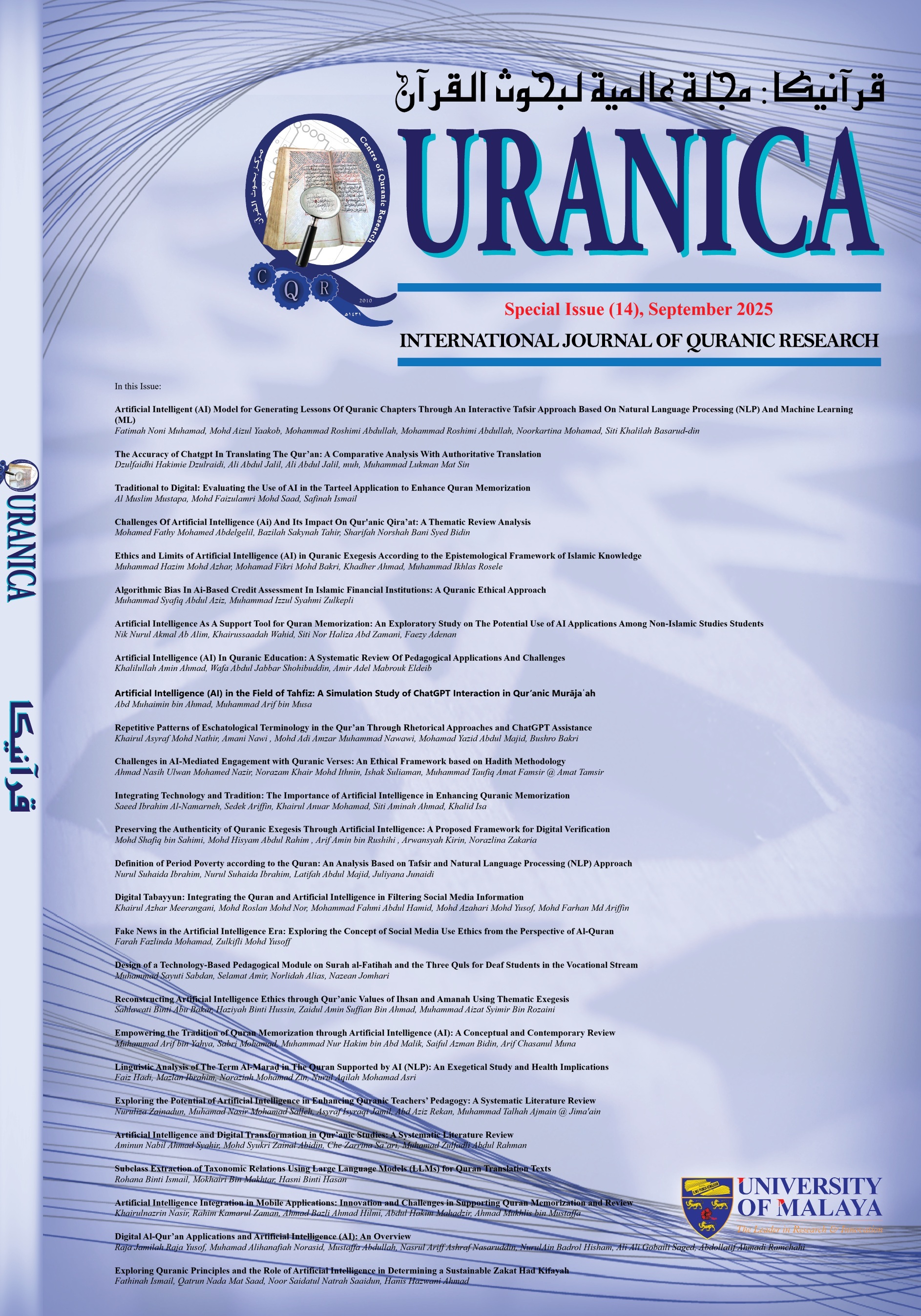
Definition of Period Poverty according to the Quran: An Analysis Based on Tafsir and Natural Language Processing (NLP) Approach
DOI:
https://doi.org/10.22452/quranica.vol17no2.14Keywords:
Definition, Menstruation, NLP, Women, Period PovertyAbstract
This study analyzes Quranic verses related to menstruation management using an integrative approach that combines classical and modern exegesis as well as Natural Language Processing (NLP) techniques. The main objective is to identify the key themes presented by the commentators and to understand the legal and ethical implications of menstruation management from the perspective of the Quran. The main verse analyzed is Surah al-Baqarah (2:222) along with highlights from the interpretations of Ibn Kathir, al-Jalalayn, al-Maraghi, and Pimpinan Ar-Rahman. With the help of NLP methods such as tokenization, frequency analysis, and topic modeling, the study findings show that the approach to menstruation management in the Quran emphasizes aspects of cleanliness, respect for women, and the maintenance of marital relationships. This study also suggests the use of NLP as an aid in the contemporary study of Quranic exegesis. This writing also links the findings to the contemporary phenomenon of period poverty, which is the lack of access to basic menstrual management needs with dignity and proposes a definition of period poverty according to the perspectives of the Quran and Sunnah.
Downloads
Published
Issue
Section
License
Disclaimer
QURANICA makes every effort to ensure the accuracy of all its contents. However, opinions, discussions, views and recommendations are expressed in this journal do not necessarily reflect the official policy of QURANICA or views of its editors or publishers. Therefore, QURANICA and its publishers will not be liable for any controversy may be arisen. The journal reserves the right, at its sole discretion, to change its terms and conditions of publications.
Copyright
It is a condition of publication that manuscript submitted to the journal have not been published, accepted for publication, nor simultaneously submitted for publication elsewhere. By submitting a manuscript, the author(s) agrees that copyright for the article is transferred to the publisher, if and when the manuscript is accepted for publication.